
Nestled at the northern tip of Flathead Lake against the backdrop of the Mission Mountains sits the town of Bigfork. In the lull of a drier-than-usual March, students from the local high school worked to understand a conversation familiar to every resident along the 161 miles of the lake’s shoreline: “What will the lake levels look like this summer? And what does that mean for the people who call it home?”
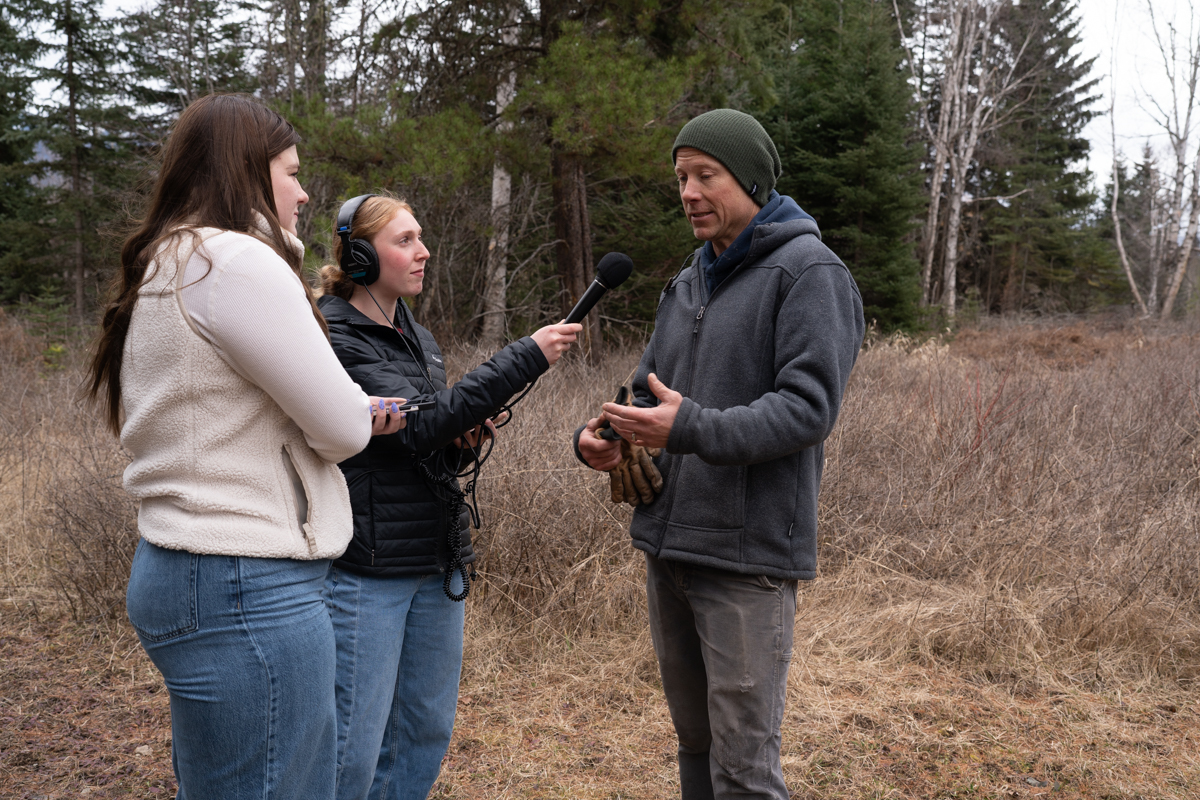
During a weeklong reporting workshop with the Montana Media Lab, student journalists from The Norse Code produced an audio story exploring how fluctuating lake levels impact life in Bigfork.They worked together to identify sources, conduct interviews, and to listen as the story came together through the perspectives of their community.

With recorders in hand, students interviewed business owners, community leaders, and tribal water managers. They spoke with the Bigfork Chamber of Commerce about tourism, the role of negative news stories, and the small businesses affected by the fluctuations in water and visitors.
Students also worked to understand the systems behind the lake levels; both natural and man made. Through interviews with Energy Keepers Inc., they learned how lake levels are influenced in part by dam operations managed by the Confederated Salish and Kootenai Tribes, alongside broader environmental changes. Warmer winters, reduced snowpack, and a shift from snow-driven to rain-driven systems are reshaping water availability in the region.

Their reporting captured a range of perspectives. Some businesses, like the Sitting Duck restaurant, feel immediate impacts when fewer boats can access docks. Others, including local outfitters, have adapted to changing conditions. Rather than focusing on a single person or a single narrative, students highlighted how different members of the community experience the same changes in different ways.